
Emotional Healing with Endometriosis: The Side Nobody Talks About

Updated: Sep 6
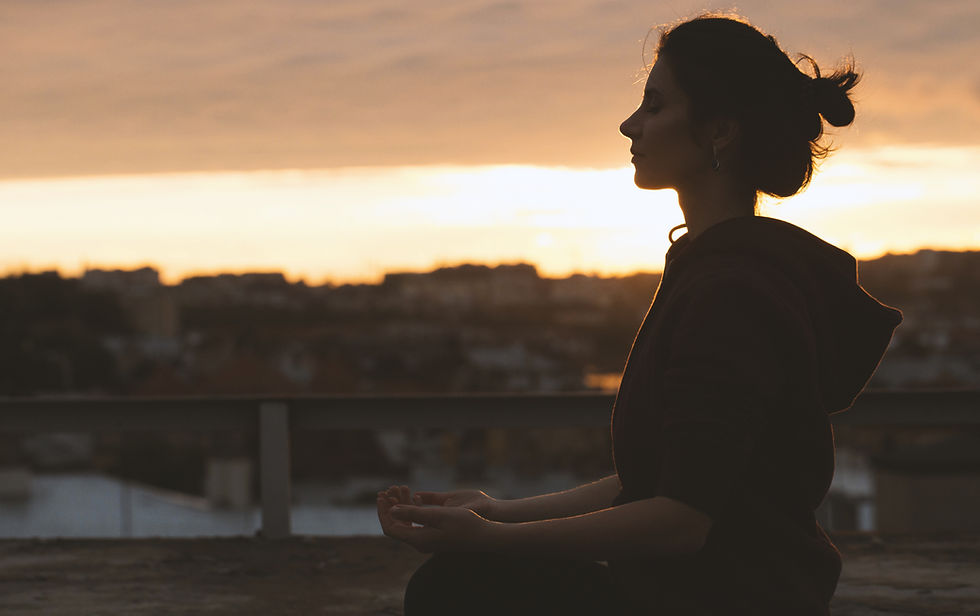
There is a version of endometriosis recovery that gets talked about a great deal.
The diet. The supplements. The surgical options. The anti-inflammatory lifestyle. All of it important. All of it real. All of it covered in depth across this blog.
And then there is the version that almost never gets discussed - the one that happened, for me, in therapy rooms and journal pages and long walks and somatic sessions and the slow, uncomfortable process of learning to feel things I had been numbing for twenty years.
The emotional healing. The inner work. The part that, in my experience, makes everything else possible.
This post is about that part. 💛
Disclaimer: The information shared on this website is for general informational, educational and inspirational purposes only. It is not a substitute for professional medical advice or intended to diagnose, treat, cure, or prevent any disease. Always seek the advice of a qualified healthcare provider with any questions regarding a medical condition or before making any changes to your diet, lifestyle, or supplementation.
Affiliate Disclosure: Some links in this post are affiliate links. If you click and purchase, I may earn a small commission at no extra cost to you. I only recommend products I genuinely trust.
Why Emotional Healing Matters as Much as Physical Recovery
For a long time I resisted this idea completely.
I had spent seventeen years being told my pain was psychological. Being dismissed with the implication that if I just managed my stress better, or thought more positively, or stopped focusing on it so much - the pain would ease. That resistance to anything that sounded remotely like "it is all in your head" ran very deep in me.
What I eventually came to understand - through research, through therapy, and through my own lived experience - is that the mind-body connection in chronic illness has nothing to do with symptoms being imagined.
It has everything to do with the very real, measurable, physiological impact of chronic stress, unprocessed trauma, and nervous system dysregulation on inflammatory activity in the body.
Research consistently shows that elevated cortisol from chronic stress impairs immune function and worsens inflammatory responses. For women with endometriosis - who have often spent years in pain, dismissed by the medical system, grieving the life the condition has taken from them, and carrying the weight of a diagnosis that touches every corner of their existence - the nervous system load is significant and real.
Addressing it is not optional. It is part of healing. 💛
The Emotional Weight Nobody Prepared Me For
When I finally received my endometriosis diagnosis at 32, I expected to feel relief.
And I did - briefly. The validation of having a name for seventeen years of pain was profound and real.
What I did not expect was the grief that followed.
Grief for the teenage girl who had been dismissed and humiliated by teachers who called her lazy. Grief for the years of opportunity lost to a condition that was never properly managed. Grief for the relationships strained by pain I could not explain, and the version of myself I might have become had I received proper care at fifteen rather than thirty-two.
Grief, I learned, is not just for death. It is for everything chronic illness takes - and endometriosis takes a great deal.
Then in 2023 my father died, and real, raw, devastating loss arrived on top of all of it.
What I discovered in the years that followed is that grief and chronic illness, when they collide, require more than time. They require intentional, supported, compassionate processing. And they require the willingness to feel things you have spent years learning not to feel.
That willingness was the hardest part of my entire healing journey. And the most transformative.

Healing starts with small, nourishing choices.
Grab your free guide: Snack Smart - 10 Anti-Inflammatory Treats for Wellness Warriors
Ten simple ideas to support your body while you do the deeper work.

No spam, ever. Just honest support straight to your inbox.
The Practices That Actually Made a Difference
I want to share what worked for me - not as a prescription, but as an honest account of the tools that supported my emotional healing alongside my physical recovery.
Every woman's emotional landscape is different. What resonated deeply for me may look different from what you need. But I share these in the hope that something here opens a door. 💛
Therapy - The Foundation of Everything
I had tried therapy before. It had not particularly helped - partly because I was not yet ready for it, and partly because the therapists I had seen did not understand chronic illness.
Finding a therapist who genuinely understood the psychological complexity of living with a chronic, painful, frequently dismissed condition changed everything.
What we worked on together was not stress management or positive thinking. It was the excavation of years of unprocessed anger - at the medical system that had failed me, at the people who had dismissed my pain, at the body I had spent two decades fighting rather than learning to inhabit. The grief and shame I had been carrying. The identity questions that chronic illness raises but rarely gets credit for: Who am I if I am not defined by my suffering? What do I want from a life that has been so shaped by limitation?
These are not quick conversations. But they are essential ones.
If you are considering therapy, I would encourage you to specifically seek out a practitioner with experience in chronic illness, chronic pain, or somatic approaches. The difference is significant.
Somatic Therapy and Qi Gong - Healing Through the Body
One of the most profound things I learned in my healing journey is that emotions are not just experienced in the mind. They are stored in the body - in the muscles, the fascia, the nervous system - and they need to be released through the body as well as processed through the mind.
Somatic therapy - a body-based approach to trauma and emotional processing - became one of the most transformative practices of my recovery. Working with a somatic practitioner helped me begin to release the physical tension patterns that years of pain, stress, and emotional suppression had embedded in my body.
Qi Gong arrived alongside it - a gentle, meditative movement practice that supports the flow of energy through the body while simultaneously calming the nervous system. I practice it daily. The cumulative effect on my pain levels, my emotional regulation, and my overall sense of feeling grounded has been profound.
I cannot recommend somatic approaches highly enough for women with endometriosis. The body has been through a great deal. It deserves practices that honour that - gently, consistently, and without demand.
Meditation and Breathwork - Five Minutes That Changed Everything
I was deeply skeptical of meditation for a long time.
What changed my mind was not a retreat or a course or a book. It was five minutes every morning, for thirty days, sitting quietly and simply paying attention to my breath.
The research on meditation and chronic pain is genuinely compelling - regular practice has been shown to reduce inflammatory markers, lower cortisol, improve pain tolerance, and support emotional regulation. But the research was not what convinced me. My own body did.
Five minutes of intentional stillness every morning changed the texture of my days in ways I had not anticipated. Not dramatically. Not immediately. But consistently, over time, in the way that only daily practices can.
I now practice for twenty minutes each morning. I would not give it up for anything.
But I started with five - and I encourage you to do the same. The barrier to entry matters enormously when you are already exhausted.
Journaling - Making the Invisible Visible
I have kept a journal throughout my healing journey - tracking symptoms, yes, but also tracking emotions, patterns, breakthroughs, and the small moments of progress that are so easy to overlook when you are in the middle of something hard.
Journaling does several things that I have found invaluable. It externalises what is internal - taking the churning thoughts and feelings out of your head and placing them somewhere you can actually look at them. It creates a record of progress that you can return to on the hard days when it feels like nothing has changed. And it builds a relationship with your own inner landscape that chronic illness has a way of severing.
You do not need to write well. You do not need to write for long. You just need to write honestly - whatever is true for you right now, in this moment, without editing or performance.
That is enough. That is more than enough.

Emotional Healing with Endometriosis: What Nobody Tells You
Emotional healing with endometriosis is not a linear process.
There will be weeks when the therapy sessions crack something open and you feel genuinely lighter. And there will be weeks when the grief comes back in full force and you wonder if you have made any progress at all.
Both are part of healing. Neither means you are doing it wrong.
What I want you to know - because no one told me this and I needed to hear it - is that the emotional work is not separate from the physical healing. It is not something you do after you have sorted out the diet and the supplements and the medical management. It is something you do alongside all of it, woven through every part of the process.
Your nervous system affects your inflammation. Your unprocessed grief affects your immune function. Your capacity to feel safe in your body affects your pain levels.
These are not abstract ideas. They are physiological realities - and they deserve to be part of your healing plan.
You are not just a body with endometriosis. You are a whole person who has been through something enormous. And all of that person deserves care. 💛
Building a Support System That Actually Supports You
One of the most important things I did in my healing journey was stop trying to do it alone.
This is harder than it sounds when you have spent years having your experience dismissed - by the medical system, sometimes by the people closest to you, and eventually, in the quietest and most damaging way, by yourself.
Building a genuine support system for emotional healing looked like this for me:
A therapist who understood chronic illness
Not optional. The difference between a therapist who understands the psychological complexity of living with endometriosis and one who does not is enormous. If the first therapist you try does not feel right, please try another.
An endometriosis community
Finding other women who genuinely understand - through online communities, support groups, or platforms like this one - provides a quality of being seen and understood that nothing else can replicate. You do not have to explain yourself from the beginning. You do not have to justify your pain. You are simply, finally, among people who get it.
Boundaries with people who do not get it
This one is painful but important. Not everyone in your life will be able to support you in the way you need. Learning to protect your energy - to limit the time spent with people who minimize your experience or drain your reserves - is not selfishness. It is survival.
Professional medical support you actually trust
A gynaecologist who specializes in endometriosis. A pelvic physiotherapist. A nutritionist familiar with the condition. Building a medical team that genuinely understands endometriosis - rather than accepting whatever generic care is offered - is an act of profound self-advocacy and self-respect.
From Me to You
If there is one thing I want you to take from this post it is this:
The pain you carry is not only in your pelvis. It is in your nervous system, your grief, your anger, your exhaustion, and the years of being told that what you were experiencing was not real.
Healing all of that requires more than an anti-inflammatory diet - as powerful as that is. It requires sitting with the hard feelings. It requires support. It requires the radical act of deciding that your emotional wellbeing matters as much as your physical symptoms.
I know how overwhelming that can sound when you are already exhausted. I know how much easier it feels to focus on the tangible, practical, measurable things - the food, the supplements, the protocols.
But please do not skip this part. Please do not leave yourself behind while you heal your body.
You deserve the whole healing. All of it. 💛
With love,
Lena
Founder of Live Beyond Endo
When you are ready to support your body alongside the emotional work
The Essential Healing Bundle gives you three powerful anti-inflammatory eBooks designed specifically for women with endometriosis.
Because nourishing your body is one of the most loving things you can do while you heal everything else.

Gentle reminder: Everything I share here is meant to inspire and support your personal wellness journey. I am not a medical professional, and nothing on this site is intended as medical advice or a substitute for the care of your own healthcare provider. Please consult a qualified professional before making changes to your health routine.
Related Resources
Life with Endometriosis: My Story of Struggle and Strength - The full personal story behind this healing journey
Endometriosis and Chronic Inflammation: My Journey to Reclaiming My Health - The science and lifestyle protocols that supported physical recovery
Endometriosis Myths and Truths: What Every Woman Needs to Know - Separating fact from fiction with evidence-based clarity
Natural Detox for Endometriosis: Support Your Body and Reduce Inflammation - Supporting your body's natural detox systems gently and consistently
Stay connected, stay informed, and above all - stay empowered.


Comments